
Lung Specific Terms
Brief explanations of common lung-related terms to provide context without offering clinical or diagnostic guidance.
1.Pulmonologist-A doctor who specializes in diagnosing and treating diseases that affect the lungs and breathing.
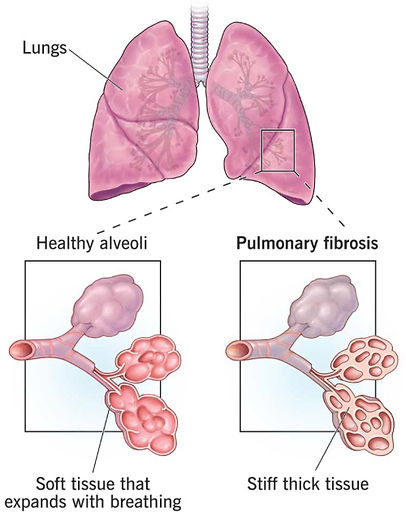
2.Interstitial Lung Disease (ILD)-A group of lung conditions that cause inflammation or scarring of lung tissue, making it harder to breathe and get enough oxygen.
3.Idiopathic Disease-A condition with no clearly identified cause, even after medical evaluation.
4.Specialty Pulmonary Center- A medical center with expertise in diagnosing and treating complex or rare lung conditions, often involving a team of specialists.
5.Pulmonary Function Test (PFT)- A group of breathing tests used to measure how well the lungs are working.
6.Pulmonary Rehabilitation- A supervised program that helps people with lung disease improve breathing, physical endurance, and quality of life.
7.Supplemental Oxygen- Extra oxygen provided through medical equipment to help maintain adequate oxygen levels in the body.
8.Progressive Lung Disease- A lung condition that worsens over time, often requiring changes in treatment and ongoing monitoring.
Frequently Asked Questions
1.What does a pulmonologist do?
A pulmonologist is a doctor who specializes in conditions that affect the lungs and breathing, especially complex or chronic lung diseases.
2.Why is a disease called “idiopathic”?
A disease is called idiopathic when doctors cannot identify a clear cause, even after appropriate testing and evaluation.
3.Why might I be referred to a specialty pulmonary center?
Specialty pulmonary centers have experience with complex or rare lung conditions and often offer advanced diagnostic tools and coordinated care teams.
4. Does having an idiopathic lung disease mean doctors don’t know how to treat it?
No. Even when the cause is unknown, doctors may still have established ways to manage symptoms, slow progression, and support quality of life.
5.Why do lung conditions often require multiple specialists?
Many lung diseases affect other parts of the body or require coordinated care, which is why patients may see pulmonologists alongside other specialists